

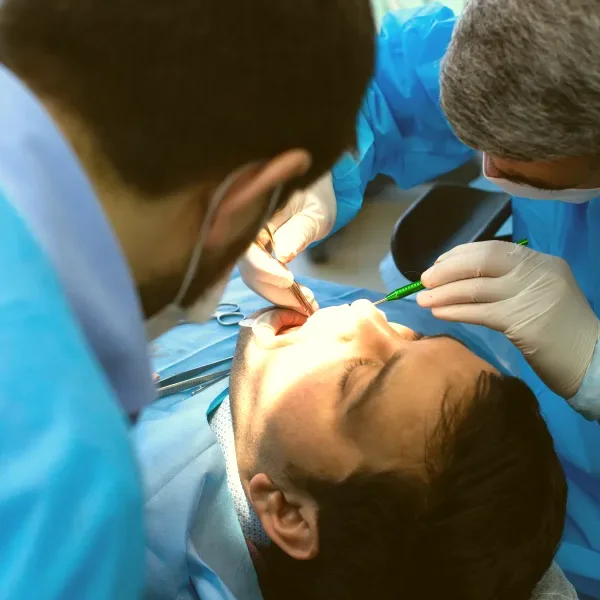
Your Pocket Reduction Procedure
Local Anaesthesia
The treatment area is numbed for your comfort.
Small Incisions
Small incisions are made in the gum tissue to separate it from the teeth.
Removing Infected Tissue
Plaque, tartar, and infected tissue are removed, and root surfaces are smoothed.
Bone Reshaping
Bone is reshaped where needed to eliminate places bacteria can hide.
Repositioning the Gum
Gum tissue is repositioned snugly against the teeth and secured with sutures.
The procedure typically takes one to three hours, depending on how many teeth are involved.
What Pocket Reduction Surgery Costs
Basic flap surgery can cost anywhere between Rs. 2,500 and Rs. 5,000 per quadrant, with complex cases involving grafts costing more. Your dentist will confirm the exact cost for your case at your consultation.

Life After Pocket Reduction Surgery
Once healed, shallower pockets are far easier to keep clean with everyday brushing and flossing, which is a large part of why this surgery is effective in the long run. Your dentist will confirm a maintenance schedule with you, so your gum health can be tracked and any new areas of concern caught early.
Recovery and Aftercare
Some swelling, discomfort, and minor bleeding are normal after surgery. Take any prescribed medications and antibiotics as directed, use antimicrobial mouthwash if recommended, and avoid hard or crunchy foods for a few weeks. Refrain from smoking, and attend your follow-up appointments so healing can be monitored. Most patients return to normal activities within a day or two, though complete healing may take several weeks.
Keeping Pockets From Returning
Reducing your gum pockets is only part of the picture, keeping them from deepening again relies on consistent oral hygiene and regular maintenance visits afterwards. Your dentist will set out a follow-up schedule tailored to your gum health, so any early signs of pockets reforming can be caught quickly.
Ready for Healthier Gums? Book a Pocket Reduction Consultation
Ready to talk about pocket reduction surgery? Book a consultation and we will assess your gums and explain what to expect.

Frequently Asked Questions
The procedure itself is typically painless, thanks to local anaesthetic. Some post-operative discomfort is normal and manageable.
Most people return to normal activities within a few days, full recovery typically takes two to four weeks.
Gums don't typically grow back after receding, the surgery aims to reposition existing gum tissue rather than regrow it.
With proper treatment and ongoing maintenance, 5mm pockets can often be reduced to a healthier depth.
4mm pockets are considered borderline and may be reversible with improved oral hygiene, your dentist can advise on your specific case.
Yes, our periodontics team offers pocket reduction surgery across our Panjagutta, Hitech City, and Nanakramguda hospitals.